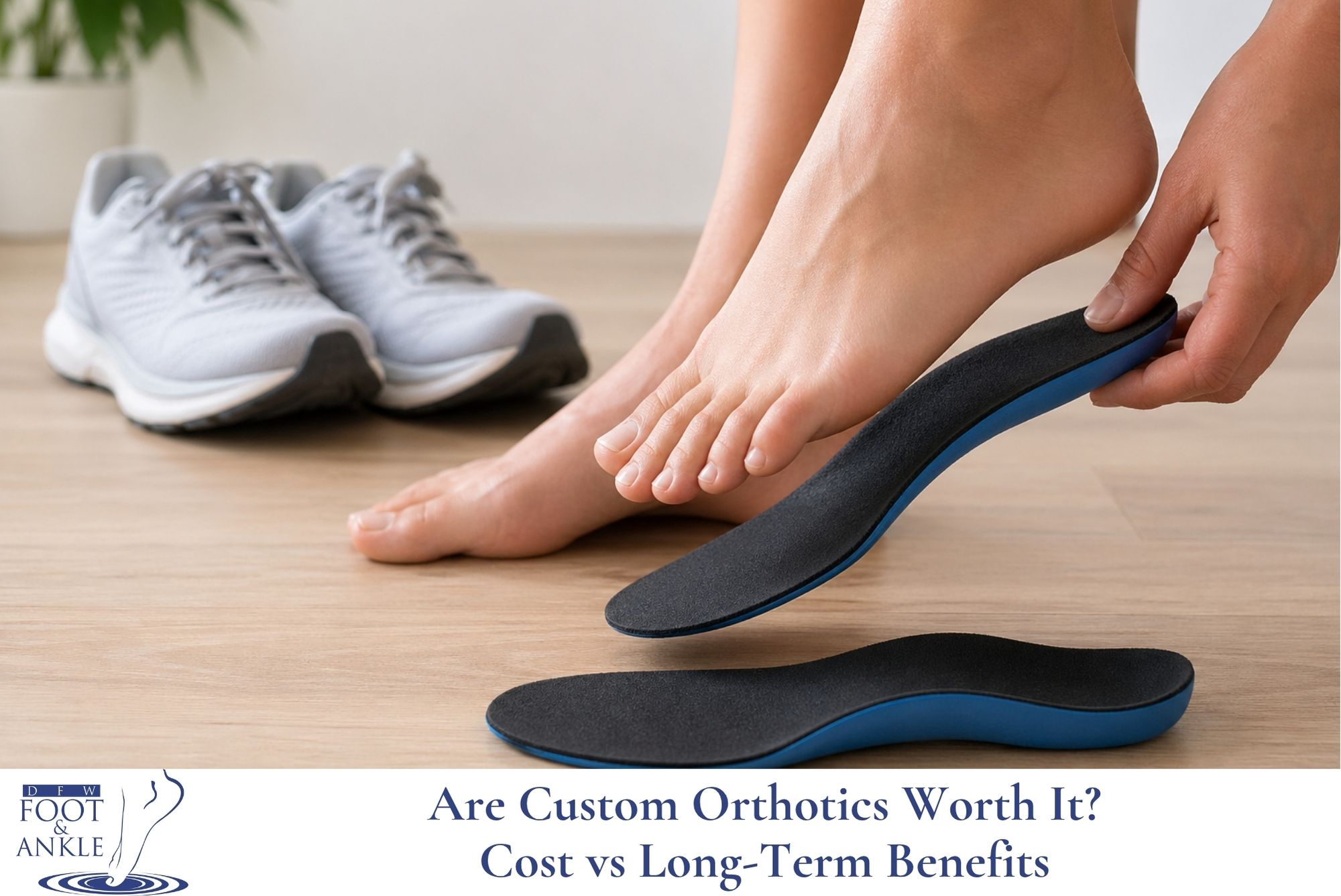
Looking Beyond the Initial Cost
When patients first learn the cost of custom orthotics, many immediately compare them to store-bought inserts available at pharmacies or retail stores. While generic insoles may seem more affordable upfront, they are designed for the general population rather than your specific foot structure and movement patterns.
The real question is not simply how much orthotics cost, but what value they provide over time.
What You Are Paying For With Custom Orthotics
Custom orthotics involve far more than the insert itself. The process is designed to evaluate how your feet function and create support tailored to your individual needs.
This process often includes:
- A professional medical evaluation
- Gait analysis
- Biomechanical assessment
- Digital measurements or foot casting
- Personalized fabrication
- Follow-up adjustments when needed
Each orthotic device is created specifically for the patient’s foot structure, activity level, and medical condition.
Why Generic Insoles Cost Less
Over-the-counter inserts are mass-produced using generalized foot shapes and support levels.
While they may provide temporary cushioning, they are not designed to:
- Correct abnormal foot mechanics
- Address uneven pressure distribution
- Adapt to medical conditions
- Provide personalized structural support
For some patients, generic inserts may offer short-term comfort, but they rarely address the underlying cause of recurring foot pain.
The Long-Term Financial Benefits
Chronic foot pain often affects more than comfort. Over time, untreated problems may contribute to:
- Repeated doctor visits
- Physical therapy expenses
- Reduced ability to exercise
- Lost productivity at work
- Knee, hip, or back discomfort
- Ongoing reliance on pain management
For many patients, investing in proper support early helps reduce future treatment costs and improves long-term mobility.
Who Benefits Most From Custom Orthotics?
Orthotics are especially valuable for patients who:
- Spend long hours standing
- Experience recurring foot pain
- Participate in sports or exercise
- Have structural foot conditions
- Want to prevent worsening symptoms
Short-Term Relief vs Long-Term Correction
Temporary inserts typically focus on immediate comfort.
Custom orthotics are designed to:
- Reduce mechanical stress
- Improve alignment
- Support healthier movement patterns
- Prevent repeated irritation and strain
This difference is why many patients experience more lasting relief with custom devices.
How Long Do Orthotics Last?
Most custom orthotics last several years with proper care.
Durability depends on factors such as:
- Activity level
- Body weight
- Shoe type
- Materials used in fabrication
Why Patients Often Delay Treatment
Many people continue replacing inexpensive inserts without ever addressing the root cause of their pain.
Over time, the repeated cost of temporary solutions may exceed the cost of professional treatment while still failing to provide lasting improvement.
Frequently Asked Questions
Are orthotics covered by insurance?
Some insurance plans provide partial coverage when orthotics are considered medically necessary.
Are more expensive orthotics always better?
Not necessarily. The most important factor is proper evaluation and fit.
Can orthotics replace supportive shoes?
No. Orthotics work best when paired with stable, supportive footwear.
Does everyone need custom orthotics?
Not always. Treatment recommendations depend on the patient’s condition, symptoms, and biomechanics.
Make an Informed Decision About Foot Health
Custom orthotics are more than a simple purchase. They are part of a long-term strategy to improve comfort, mobility, and overall foot function.
Contact Information
DFW Foot and Ankle
2281 Olympia Dr #200
Flower Mound, TX 75028
Phone: (972) 899-2170
Text Us: (972) 430-4109
Fax: (972) 899-2171
Email: office@drdaveysuh.com
Website: drdaveysuh.com
Book An Appointment: https://compulinkwebapp.promptlytech.com/login?code=002372