
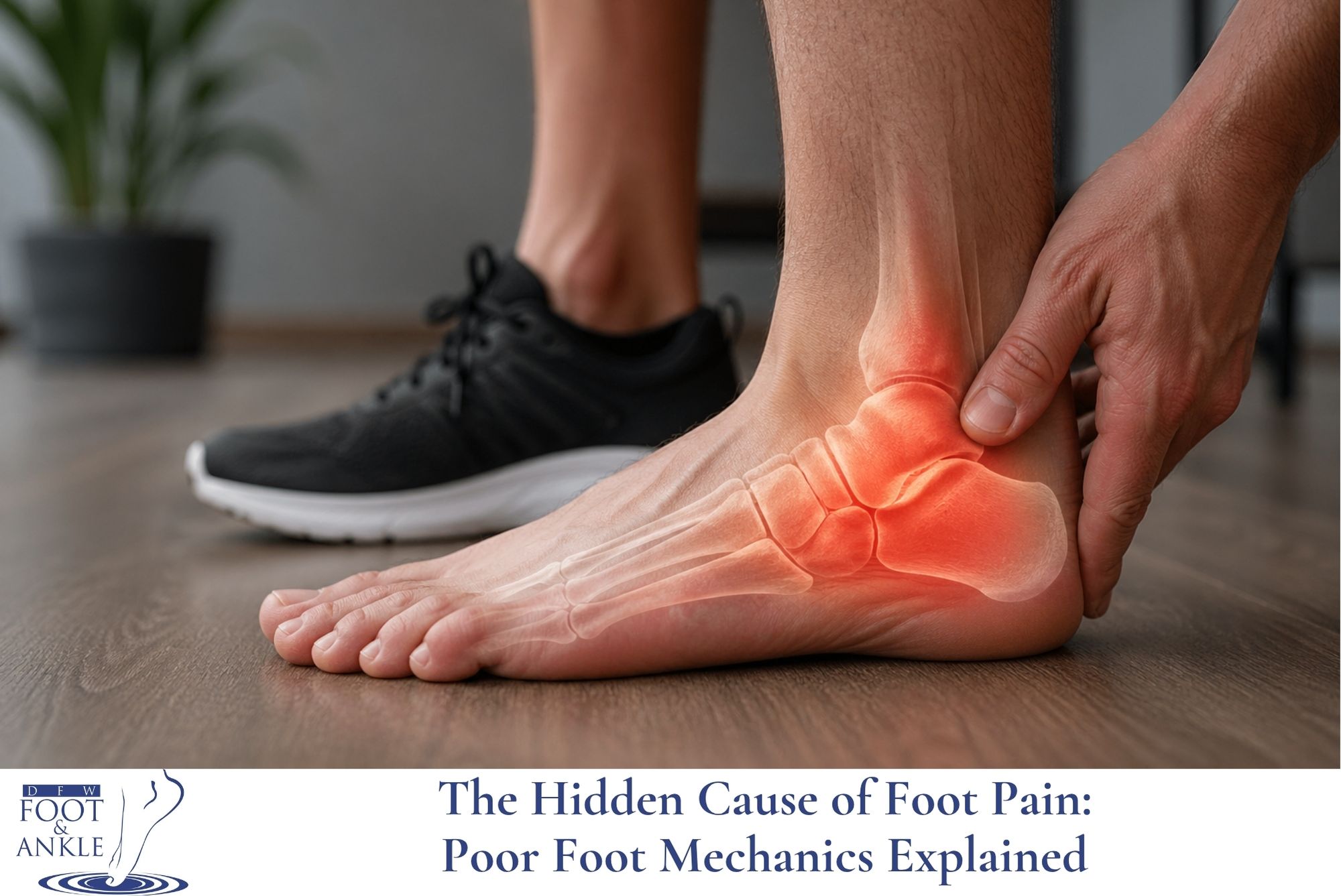
Why Foot Pain Often Returns
Many people spend months treating symptoms without addressing the true cause of their discomfort. Ice, rest, and supportive shoes may provide temporary relief, but pain often returns if poor foot mechanics are not corrected.
Even a small imbalance can create stress that builds with every step.
What Are Foot Mechanics?
Biomechanics refers to how the feet move and absorb pressure during walking.
Healthy movement depends on:
- Proper arch function
- Balanced weight distribution
- Controlled ankle motion
- Stable push-off while walking
When one part of this system does not function correctly, other structures begin to compensate.
Common Mechanical Problems
Overpronation
The foot rolls inward excessively, often leading to instability and arch strain.
High Arches
Rigid feet absorb less shock, increasing pressure on the heel and forefoot.
Uneven Pressure Distribution
Some patients place too much weight on one area of the foot, which can lead to irritation and chronic discomfort.
Limited Ankle Mobility
Restricted ankle movement changes walking mechanics and increases stress on surrounding structures.
How Foot Mechanics Affect the Entire Body
The feet influence posture and movement throughout the body.
Poor mechanics may contribute to:
- Heel pain
- Shin splints
- Knee discomfort
- Hip tightness
- Lower back pain
- Recurring ankle sprains
Signs of a Mechanical Problem
You may have a biomechanical issue if you experience:
- Uneven shoe wear
- Foot fatigue after standing
- Recurring injuries
- Pain that changes locations
- Difficulty balancing
- Chronic calf tightness
Why Generic Solutions Often Fail
Many treatments focus only on the location of pain instead of the underlying cause.
For example, heel pain may actually stem from instability elsewhere in the foot or ankle. Successful treatment usually requires understanding how the foot functions during movement.
Treatment Options at DFW Foot and Ankle
Depending on the patient’s needs, treatment may include:
- Custom orthotics
- Gait retraining
- Stretching and strengthening programs
- Footwear recommendations
- Activity modifications
- Advanced podiatric therapies
Why Early Treatment Matters
Biomechanical issues often worsen gradually over time. The longer unhealthy movement patterns continue, the more difficult they can become to correct.
Early treatment helps preserve healthy movement and prevent chronic strain.
Frequently Asked Questions
Can biomechanical problems exist without severe pain?
Yes. Some patients notice fatigue or instability long before significant pain develops.
Are biomechanical issues hereditary?
Some structural patterns are inherited, while others develop from injuries or lifestyle factors.
Can shoes alone correct poor mechanics?
Supportive footwear helps, but many patients need additional treatment or custom support.
Does age affect biomechanics?
Yes. Muscle strength, flexibility, and joint mobility naturally change over time.
Find the Source of Recurring Foot Pain
If pain keeps returning despite temporary treatments, poor foot mechanics may be contributing to the problem. A comprehensive evaluation can identify the underlying issue and help restore healthier movement.
Contact DFW Foot and Ankle
DFW Foot and Ankle
2281 Olympia Dr #200
Flower Mound, TX 75028
Phone: (972) 899-2170
Text Us: (972) 430-4109
Fax: (972) 899-2171
Email: office@drdaveysuh.com
Website: drdaveysuh.com
Book An Appointment:
https://compulinkwebapp.promptlytech.com/login?code=002372